Villaviciosa de al lado: The Lottery Win That Ruined Everyone’s Reputation
- Category: Comedy
- Release Date: December 2, 2016 (Spain)
- Cast: Carmen Machi, Leo Harlem, Macarena García, Arturo Valls, Carmen Ruiz, Belén Cuesta, Jon Plazaola, Yolanda Ramos
- Language: Spanish (English Subtitles Available)
- Duration: 1h 30m
- Director: Nacho G. Velilla
They say you should be careful what you wish for, especially when that wish involves winning the lottery. In Spain, the Christmas Lottery (known as “El Gordo”) is a national obsession, a time of shared hope and collective joy. But what happens when the winning ticket isn’t bought at a respectable administration, but at the local brothel? This is the delicious, cringe-inducing premise of Villaviciosa de al lado (English title: A Stroke of Luck).
Directed by the king of Spanish ensemble comedies, Nacho G. Velilla, this film became a box office sensation upon its release. It taps into a very specific vein of Spanish humor: the “esperpento,” the farce, and the biting social satire of small-town hypocrisy. For the audience on fmovies.tr looking for a comedy that combines slapstick laughs with a sharp critique of moral double standards, this film is a goldmine. It asks a question that few of us would want to answer: Would you rather be rich and shamed, or poor and dignified?
The Plot: A Town, A Brothel, and A Dilemma
The setting is the fictional town of Villaviciosa de al lado, a place that has seen better days. The town is economically depressed, and its crown jewel—a historic spa—is on the brink of bankruptcy, threatening the livelihoods of many residents. The atmosphere is one of quiet desperation. The only business that seems to be thriving, hidden in the outskirts, is the Club Momentos, a roadside hostess club (a polite euphemism for a brothel) run by the tough but fair Mari (Carmen Machi).
The inciting incident is pure comedic gold. The Club Momentos buys a series of lottery tickets for the Christmas draw and distributes shares (participaciones) to its loyal customers—who happen to be the majority of the married men in town. When the number wins the grand prize (“El Gordo”), the town erupts in celebration… until the men realize where the winning number was sold.
The Walk of Shame
Suddenly, the town is divided. The wives are ecstatic, dreaming of paying off mortgages and buying new cars, unaware that their husbands hold the winning tickets. The husbands, however, are in a state of panic. To claim the millions, they must present the tickets stamped by the Club Momentos. Doing so would be a public admission of infidelity and a confession that they frequent the brothel.
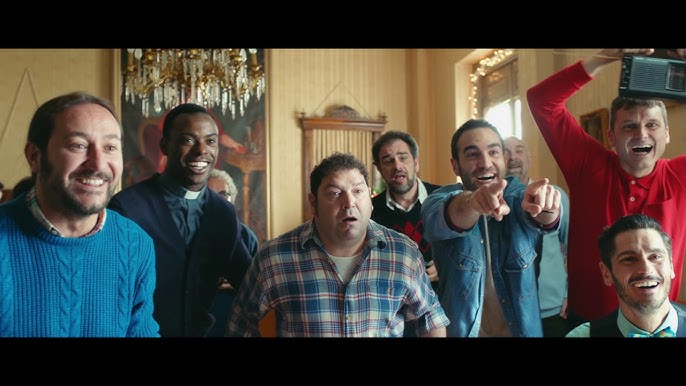
The film follows the frantic attempts of these men—including the corrupt Mayor (Leo Harlem), the naive Anselmo (Arturo Valls), and others—to get the money without their wives finding out. Plans are hatched, lies are told, and naturally, everything goes spectacularly wrong. Amidst this chaos, a sweeter subplot emerges involving a young student (Macarena García) and the spa’s new manager (Jon Plazaola), grounding the farce in a touch of romance.
Director’s Vision: Nacho G. Velilla’s Ensemble Mastery
Nacho G. Velilla is a veteran of Spanish television (Aída, 7 Vidas) and cinema (Perdiendo el norte). His signature style is the fast-paced ensemble comedy, where a large cast of characters bounces off one another in escalating situations of absurdity.
In Villaviciosa de al lado, Velilla balances a massive cast with impressive dexterity. He ensures that every character, no matter how minor, gets a punchline. His direction favors bright, saturated colors that highlight the absurdity of the situation. He contrasts the dusty, traditional aesthetic of the village square and the church with the neon-lit, velvet-draped interiors of the brothel.
Velilla draws inspiration from true events. The film is loosely based on a real incident that occurred in a town in Toledo, where a brothel sold winning lottery tickets. By taking this real-life anecdote and amplifying it, Velilla creates a mirror for Spanish society. He uses comedy to expose the “machismo” and the facade of respectability that often governs rural life. He directs the chaos like a conductor, ensuring that the physical comedy (slapstick) never overshadows the verbal wit.
The Cast: A Who’s Who of Spanish Comedy
The strength of this movie lies in its casting. It assembles the “Avengers” of Spanish comedy.
- Carmen Machi as Mari: Machi is a national treasure. As the madam of the Club Momentos, she brings humanity and dignity to a role that could have been a caricature. She acts as the moral compass of the film, pointing out the hypocrisy of the men who use her services by night and shun her by day.
- Leo Harlem as Anselmo (The Mayor): Leo Harlem, a famous stand-up comedian, plays the archetype of the corrupt, loudmouthed politician perfectly. He represents the worst of the town—arrogant, unfaithful, and greedy. His frantic energy drives much of the plot.
- Arturo Valls and Belén Cuesta: Valls plays the bumbling fool with great physical comedy chops, while Belén Cuesta shines as the suspicious wife. Cuesta’s ability to play neurotic characters makes her scenes hilarious.
- Yolanda Ramos: Though in a supporting role, Ramos steals every scene she is in with her eccentric delivery and bizarre improvisations. Her character represents the gossiping soul of the village.
- Macarena García and Jon Plazaola: They provide the “Romeo and Juliet” subplot. While less comedic, their storyline provides the emotional stakes, dealing with the closure of the spa and the future of the town.
Critical Review: Hypocrisy Under the Microscope
Villaviciosa de al lado is a comedy of errors, but it is also a surprisingly sharp satire.
The “España Profunda” (Deep Spain)
The film excels at depicting the dynamics of a small town. The gossip, the judgment, and the power of the Church are all lampooned. The lottery win is merely a catalyst that strips away the masks people wear. The film argues that everyone has secrets, but only the poor are punished for them. The rich (or those about to be rich) try to buy their way out of morality.
Comedy Style
The humor is broad and accessible. It relies on misunderstandings, visual gags, and rapid-fire dialogue. While it occasionally dips into crude humor (it is set around a brothel, after all), it is rarely mean-spirited. The women of the town, initially presented as victims of their husbands’ lies, eventually take agency in the third act, leading to a satisfying conclusion that subverts the patriarchal status quo.
Pacing and Structure
At 90 minutes, the film does not overstay its welcome. The first act sets up the premise efficiently. The second act, dealing with the frantic attempts to cash the tickets, is a crescendo of disasters. The third act resolves the emotional arcs surprisingly well. While it follows a predictable formula, the execution is so energetic that the predictability doesn’t matter. It is “comfort food” cinema—familiar, warm, and satisfying.
Villaviciosa de al lado is a hilarious romp that succeeds because it understands human nature. It knows that greed and lust are powerful motivators, but the fear of embarrassment is even stronger.
For international viewers, it offers a glimpse into Spanish culture—the obsession with the lottery, the importance of the village bar, and the enduring power of family (even dysfunctional ones). With standout performances from Carmen Machi and Leo Harlem, it is a comedy that will make you laugh out loud while making you thankful you aren’t holding a winning ticket from the Club Momentos.